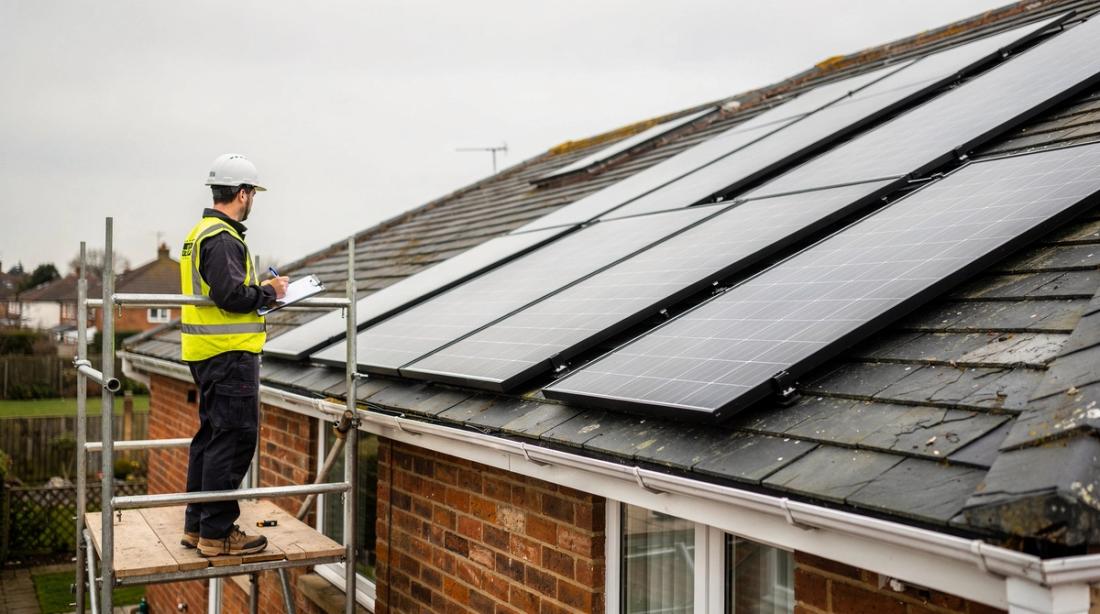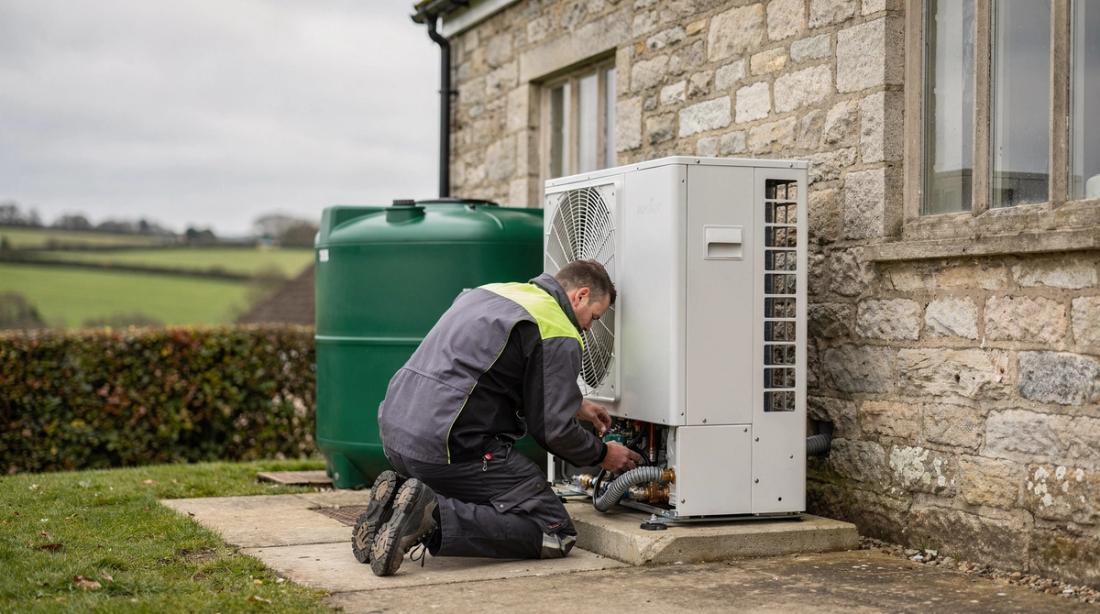

The Boiler Upgrade Scheme pays £7,500 towards an air-to-water or ground source heat pump, or £9,000 in eligible off-gas-grid homes, and only MCS certified installers can apply for and redeem the vouchers (Ofgem, 2026). The homeowner gets the discount; the installer does the application, carries the paperwork and waits to be paid.
The scheme is large enough to shape the market. From its launch in May 2022 to 30 September 2026, Ofgem received 160,874 voucher applications and paid £687,450,500 in grants on 96,611 redeemed vouchers, with £143,585,000 left in the Year 5 budget running to 31 March 2027 (Ofgem, 2026). This guide covers BUS from the installer's side: grant values, why MCS is the gate, how a voucher moves from application to payment, and where jobs stall. Where a figure is our own arithmetic, we say so.
Key takeaways
- Grant values: £7,500 for air-to-water and ground source heat pumps, £9,000 off-gas when replacing oil or LPG, £5,000 for biomass and £2,500 for air-to-air heat pumps.
- MCS is mandatory: installers must be MCS certified and meet MCS standards to apply for or redeem vouchers.
- Installer-led: you discount the grant in the quote, apply through your Ofgem installer account and redeem after installation.
- Demand is mixed: BUS has paid out over £687 million, but DESNZ counted 20,895 retrofit heat pump installs in H1 2026, down 22%.
- Cash flow: the grant comes off the customer's invoice, so you fund up to £9,000 per job until redemption.
How much is the Boiler Upgrade Scheme grant in 2026?
From 21 July 2026, the grant is £7,500 for air-to-water and ground source heat pumps, £9,000 for those heat pumps in off-gas-grid homes replacing oil or LPG, £5,000 for biomass boilers and £2,500 for air-to-air heat pumps (GOV.UK, 2026). Ofgem says the £9,000 rate is available until 31 March 2027 (Ofgem, 2026).
The grant categories in the DESNZ notice, simplified:
- Air-to-water or ground source heat pump, on the gas grid: £7,500.
- Air-to-water or ground source heat pump, off-gas, replacing oil or LPG: £9,000.
- Air-to-water or ground source heat pump, off-gas, replacing coal, a fossil fuel hybrid or direct electric heating: £7,500.
- Air-to-air heat pump, any eligible property: £2,500, with no higher off-gas rate.
- Biomass boiler, off-gas, replacing a listed fossil fuel system: £5,000.
Ofgem limits the air-to-air grant to residential properties (Ofgem, 2026). The certification position for air-to-air installers is still developing, so check our air-to-air heat pump grant guide before quoting one. The scheme is open in England and Wales.
Two details catch installers out. The £9,000 rate depends on what is being replaced, not only on whether the home is off the gas grid: an off-gas property moving away from direct electric heating attracts £7,500 (GOV.UK, 2026). Grant values also change over time, and the current set took effect on 21 July 2026, so confirm the category and value before the quote goes out rather than after the survey report is filed.
Why do installers need MCS certification for BUS?
Ofgem states that installers must be MCS certified and meet the MCS standards to take part, and that MCS certified installers apply for and redeem vouchers on behalf of property owners (Ofgem, 2026). A homeowner cannot apply alone, so an uncertified installer cannot sell a grant-funded heat pump at all.
Three practical consequences follow. First, you need a BUS installer account on Ofgem's website before the first application (MCS, 2026). Second, your MCS scope must cover the technology you are installing. Third, check your consumer code status: under the redeveloped MCS scheme, membership is no longer an MCS requirement, but NICEIC notes installers may still need it to claim certain government funding such as BUS vouchers (NICEIC, 2026).
If you are not certified yet, start with how to become MCS certified and budget using our breakdown of MCS certification cost. On the MCS averages, year-one certification for one technology is about £1,090 plus £30 per installation, well under the value of a single grant.
How does the BUS voucher process work for installers?
The installer surveys, quotes with the grant already deducted, applies to Ofgem with the owner's consent, installs within the voucher validity period and then submits a redemption application. MCS tells installers to discount the grant from the total cost paid by the customer and show it in the quote (MCS, 2026).
The steps in order:
- Survey the property and confirm eligibility: the customer must own it, which includes businesses, second homes and rented-out properties, and the system must replace fossil fuel heating such as oil, gas, electric or LPG (MCS, 2026). Size the system with a full heat loss calculation.
- Quote with the grant deducted from the customer's total.
- Apply for the voucher through your Ofgem installer account once the customer has accepted. The owner must consent to the application (APHC, 2022).
- Install within the voucher validity period. At launch Ofgem set this at three months for air source heat pumps and biomass and six months for ground source (APHC, 2022); confirm the current period in Ofgem's installer guidance.
- Commission, raise the MCS certificate and submit the redemption application. Eligibility evidence is checked at both the voucher and the redemption stage.
For pricing the job itself, our guide to air source heat pump costs in the UK sets out typical installed prices before the grant.
Keep these records from each stage in the job file:
- Survey: photos of the existing heating system and fuel type, plus the heat loss calculation.
- Quote: the signed quote showing the grant deducted from the customer total.
- Voucher: the voucher reference, value and expiry date.
- Handover: commissioning records and the MCS certificate number used for redemption.
What does the scheme data say about demand?
Ofgem had issued 106,185 vouchers worth £763,205,500 and redeemed 96,611 by 30 September 2026 (Ofgem, 2026). Heat pump volumes fell in 2026, though: DESNZ data shows 20,895 MCS certified retrofit heat pump installs replacing fossil fuel systems in the first half of 2026, down 22% on H1 2025 (Cooling Post, 2026).
MCS figures point the same way, with just over 25,000 heat pump installations from January to June 2026, down 17%, while rooftop solar reached 148,531 and battery storage 36,000 (MCS, 2026). For installers, the £9,000 off-gas rate is the clearest growth lever left in the scheme: oil and LPG homes now carry the highest grant, and the rate runs only until 31 March 2027.
Budget is the other variable. The £143,585,000 remaining for Year 5 would cover about 19,000 vouchers at £7,500 each, on our arithmetic; the real number is lower when £9,000 vouchers are in the mix. Vouchers have always been issued on a first come, first served basis (APHC, 2022), so speed of application matters.
Cash flow and risk for BUS installers
Because the grant is deducted from the customer's invoice (MCS, 2026) and only paid once the voucher is redeemed, your business funds £7,500 to £9,000 per job between installation and payment. A voucher is not a guarantee of payment: the redemption application must also meet every eligibility criterion (APHC, 2022).
Ways to keep that exposure under control:
- Take a deposit on the customer's share: the grant covers part of the price, not all of it.
- Track every voucher's expiry date: an expired voucher means a new application.
- Raise the MCS certificate promptly: NICEIC says the redeveloped scheme gives 30 days to create a certificate (NICEIC, 2026), but redemption waits for it.
- Model working capital: at two BUS jobs a week, about £15,000 to £18,000 of grant money is in transit for each week of payment delay, on our arithmetic.
A worked example: an installer completing eight BUS jobs a month at £7,500 each has £60,000 of grant value passing through the business every month. If redemption and payment take four weeks after commissioning, roughly £60,000 is tied up as working capital at any time, rising to £72,000 at the £9,000 off-gas rate. These are illustrative numbers, not Ofgem processing times, so plug in your own payment history.
Which mistakes delay BUS payments?
Most delays are administrative rather than technical. Evidence is checked twice, at voucher and at redemption, a voucher lapses if the installation misses its validity period, and the owner must have consented to the application (APHC, 2022). Any mismatch between the two stages can hold up payment.
- Mismatched details: the property, owner and system details on the redemption must match the voucher.
- Expired voucher: installation slipped past the validity window.
- Missing consent: the owner has not confirmed the application.
- Wrong grant category: quoting £9,000 for a property that is replacing direct electric heating, which attracts £7,500 (GOV.UK, 2026).
- Certificate not raised: the MCS certificate is late or missing at redemption.
- Scope gap: your MCS certification does not cover the technology installed.
For the wider policy picture, including the 2026 to 2030 funding plan, see our Warm Homes Plan guide for installers.
Keeping BUS admin manageable
Every BUS job produces the same evidence chain: survey, heat loss calculation, quote showing the deduction, voucher, commissioning records and MCS certificate. With 160,874 applications received since 2022 (Ofgem, 2026), the firms that scale are the ones that treat that chain as one project file.
Use one naming convention for every job, store the voucher reference with the quote, and set a reminder before each voucher's expiry. If you already run quotes and projects in Reonic, keep the BUS voucher and MCS certificate in the same project record so redemption evidence sits in one place.
A short weekly routine prevents most of the delays listed above: review vouchers expiring in the next 30 days, check which completed jobs still lack an MCS certificate, and confirm which redemption applications went in that week.
Boiler Upgrade Scheme FAQ
Do installers need MCS certification for the Boiler Upgrade Scheme?
Yes. Ofgem requires installers to be MCS certified and meet MCS standards. MCS certified installers apply for and redeem vouchers on behalf of property owners, who cannot apply on their own.
How much is the BUS grant in 2026?
£7,500 for air-to-water and ground source heat pumps, £9,000 for those heat pumps in off-gas homes replacing oil or LPG until 31 March 2027, £5,000 for biomass boilers and £2,500 for air-to-air heat pumps.
Who receives the grant money?
The installer. The grant is deducted from the customer's price in the quote, and Ofgem pays it once the voucher is redeemed after installation and commissioning.
How long is a BUS voucher valid?
At launch Ofgem set validity at three months for air source heat pumps and biomass boilers and six months for ground source heat pumps. Check Ofgem's current installer guidance before scheduling a job close to the deadline.
Is the Boiler Upgrade Scheme means-tested?
No income test appears in the eligibility rules: the customer must own the property, including businesses, second homes and rented-out homes, and the new system must replace fossil fuel heating.