
MCS certification cost for a single-technology installer comes to about £1,090 in year one plus £30 for every installation certificate, according to the MCS breakdown of consumer code, certification body and licence fees (MCS, 2026). After the first year, the same breakdown puts the running cost at about £890 a year plus certificates.
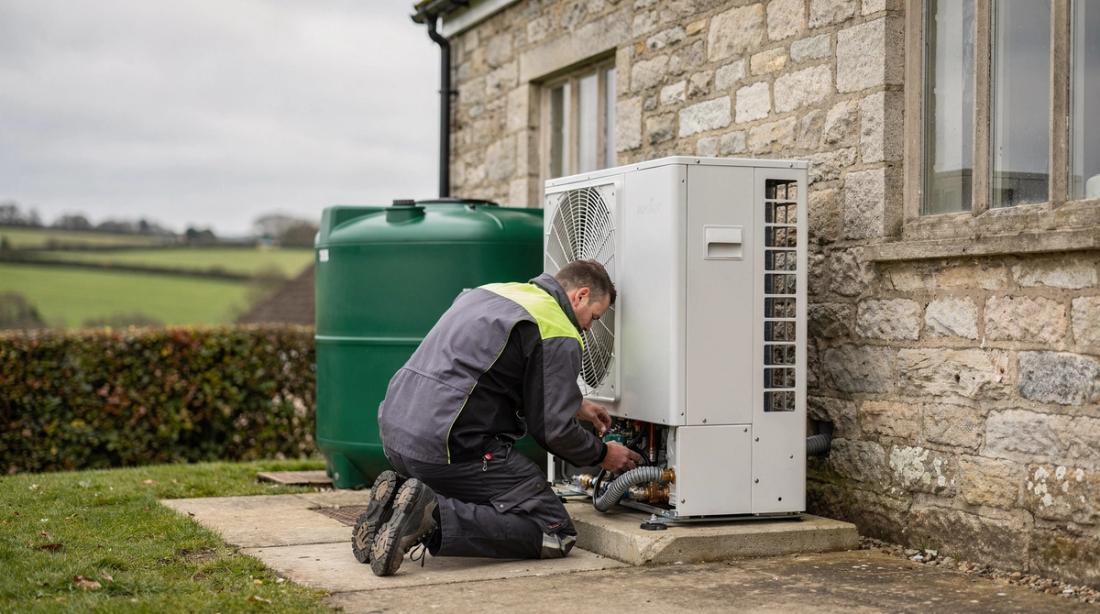
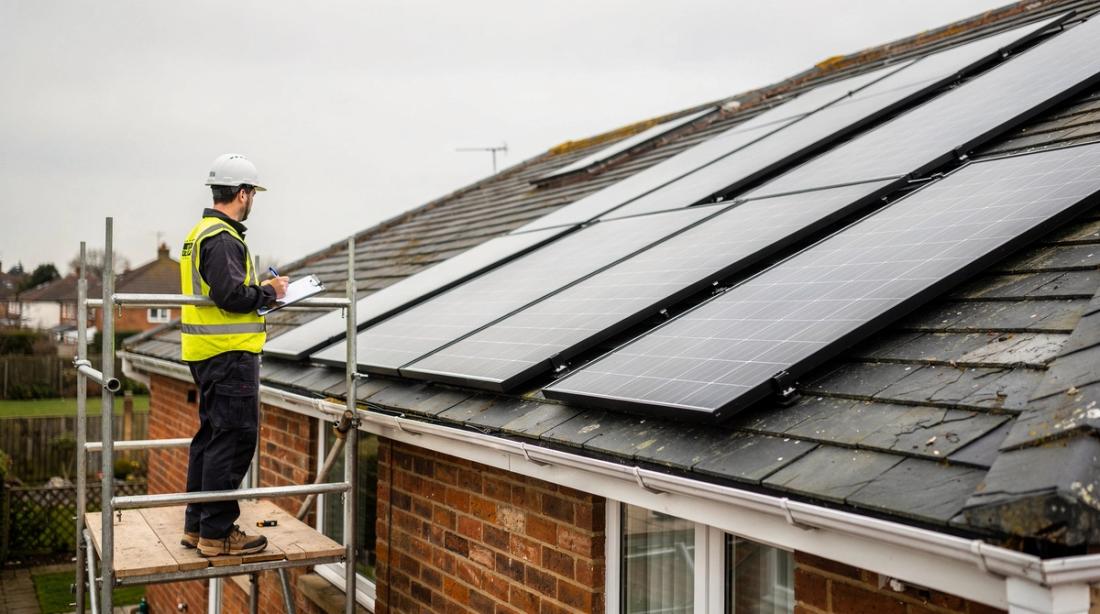
The fee matters because MCS is the gate to the domestic market. Between January and June 2026, MCS certified installers registered 148,531 rooftop solar installations, 36,000 battery installations and just over 25,000 heat pumps (MCS, 2026). This guide breaks down what sits on the invoice, what one certification body actually charges, what the redeveloped MCS scheme adds or removes, and how to keep the total down. Where a figure is our own arithmetic rather than a published number, we say so.
Key takeaways
- Year one: about £1,090 plus £30 per installation for one technology on the MCS breakdown, with the certification body fee as the largest single line.
- NICEIC example: a one-technology application is £675 ex VAT, annual surveillance £615 ex VAT, plus a £55 MCS licence fee each year.
- Redeveloped scheme: a financial protection product is now required on every installation, while consumer code membership stops being a scheme requirement after transition.
- Hidden costs: rescheduled or missed assessments cost £255 to £435 ex VAT each, and Technical Supervisors on grandfather rights need an in-date qualification by 1 April 2028.
- Payback: one Boiler Upgrade Scheme job carries a £7,500 grant, several times the year-one certification bill.
How much does MCS certification cost in year one?
For one technology, MCS estimates year-one costs at £1,090 plus £30 per installation certificate. That total combines an average certification body fee of £650, consumer code membership at £385 for a firm of one to six employees, and the £55 annual MCS fee (MCS, 2026). Larger firms pay more for consumer code membership.
The MCS breakdown, line by line:
- Certification body: average £650 in year one and £550 a year after that, per technology (MCS, 2026).
- Consumer code (RECC example): £100 joining fee plus a membership fee based on employee numbers, giving £385 in year one and £285 a year for one to six employees.
- HIES alternative: advertised at £695 plus VAT on the same MCS page.
- MCS fee: £55 per company, each year.
- MCS certificate: £30 for every installation you register.
- Total: £1,090 plus certificates in year one, then £890 plus certificates each year.
Those figures are averages. Your real number depends on the certification body you choose and how many technologies you add. If you are still at the start of the process, the step-by-step route is in our guide on how to become MCS certified, and the consumer code choice is compared in HIES vs RECC.
What does NICEIC charge for MCS certification?
NICEIC publishes a fee sheet for MCS certification. It lists a £95 ex VAT initial application fee, a £55 MCS licence fee and a one-technology application fee of £675 ex VAT (£810 including VAT), with surveillance fees applying from 1 April 2025 (NICEIC, 2025). It is the most detailed public price list we found this year.
Application fees rise with the number of technologies, but not in proportion:
- One technology: £675 ex VAT (£810 inc VAT).
- Two technologies: £930 ex VAT (£1,116 inc VAT).
- Three technologies: £1,290 ex VAT (£1,548 inc VAT).
- Four technologies: £1,700 ex VAT (£2,040 inc VAT).
- Adding a technology later: extension to scope from £615 ex VAT for one technology.
On the sheet's own figures, an initial application, the licence fee and a one-technology application add up to £825 ex VAT, or £990 including VAT. That is our sum of the listed items; confirm with NICEIC which items apply to your route. Applying for two technologies together costs £930 ex VAT against £1,350 for two separate single-technology applications, a saving of £420 on our arithmetic. For a side-by-side view of the two largest bodies, see NICEIC vs NAPIT for MCS.
What does it cost to stay MCS certified each year?
Staying certified costs about £890 a year plus £30 per installation on the MCS averages (MCS, 2026). At NICEIC, annual surveillance is £615 ex VAT for one technology and £870 for two, plus the £55 MCS licence fee, due on the certification anniversary (NICEIC, 2025).
The redeveloped scheme changes how often you are assessed, which changes how much management time surveillance takes. NICEIC describes three levels (NICEIC, 2026):
- Reduced: an assessment every three years, with an annual document submission still required.
- Standard: an annual assessment based on certification date, with at least one site per technology.
- Enhanced: an annual assessment with at least five sites per technology.
Frequency is based on calculated risk, including business scenario, installation volume, years certified, complaints and past assessment outcomes. New contractors stay on the standard surveillance schedule for at least two years (NICEIC, 2026). The cheapest way to move towards reduced assessment is a clean track record, which is mostly a documentation habit.
Which costs does the redeveloped MCS scheme add or remove?
NICEIC was approved on 23 February 2026 to deliver the redeveloped MCS installer scheme and began moving businesses across from 9 March 2026 (NICEIC, 2026). Two changes affect cost directly: installers must buy an approved MCS financial protection product, and consumer code membership is no longer mandatory after transition.
The practical effect on your budget:
- New per-job line: every installer must purchase an MCS approved financial protection product, with new products approved by MCS in February 2026 (NICEIC, 2026). Price it into each quote.
- Possible saving: consumer code membership becomes optional, but NICEIC notes you may still need it to claim certain government funding such as Boiler Upgrade Scheme vouchers (NICEIC, 2026).
- Longer certificate window: NICEIC says certificates can now be created within 30 days rather than 10, aligned with Building Control, which reduces the cost of chasing late paperwork.
- Migration: transition is completed by desktop assessment only, and assessment dates do not change for businesses already certified (NICEIC, 2026).
The full list of rule changes, beyond cost, is in our guide to the redeveloped MCS installer scheme.
Which hidden MCS costs should you budget for?
The fees nobody plans for are penalties and changes. NICEIC charges £365 ex VAT to reschedule an assessment with two days' notice or less, £255 with under 21 days' notice, and a £435 void fee if nobody is present when the assessor attends (NICEIC, 2025). An additional assessment costs £435 ex VAT.
Other lines that appear during the year:
- Administrative changes: £65 ex VAT for a change of company details, and £65 for a change of Technical Supervisor, excluding any extra assessment (NICEIC, 2025).
- TrustMark status: £145 ex VAT a year, if you choose it.
- Qualifications: Technical Supervisors on grandfather rights have until 1 April 2028 to obtain an in-date qualification (NICEIC, 2026), so budget for training before then.
- Nominated Technical Person: MCS recommends evidence of an MCS approved training course, with the full criteria in MCS 025 (MCS, 2026).
- Quality management system: MCS says it should be proportionate to the size of the business and does not need to be long or paid software, so a consultant is optional.
The largest hidden cost is time: preparing evidence for assessments and raising certificates on every job. Our guide to renewable installation paperwork lists what an assessor expects to see.
Is MCS certification worth the cost?
For domestic work, yes. Only MCS certified installers can apply for and redeem Boiler Upgrade Scheme vouchers, worth £7,500 for an air-to-water or ground source heat pump and £9,000 in eligible off-gas homes (Ofgem, 2026). Smart Export Guarantee payments also require an MCS certified installation or an accredited equivalent (GOV.UK, 2026).
On the MCS averages, a single BUS grant of £7,500 is close to seven times the £1,090 year-one bill for one technology. That is our comparison, not a published payback figure, and it ignores your own time. The market is not growing everywhere, though: DESNZ data shows 20,895 MCS certified retrofit heat pump installations replacing fossil fuel systems in the first half of 2026, down 22% on the same period of 2025 (Cooling Post, 2026). Certification is the entry ticket; volume still depends on your sales pipeline. How the grant process works from the installer side is covered in our guide to MCS and the Boiler Upgrade Scheme.
How to keep MCS certification costs down
Most savings come from choices you make before the first invoice. On NICEIC's sheet, certifying two technologies together costs £930 ex VAT instead of £1,350 separately, and an avoided reschedule saves up to £365 (NICEIC, 2025). The rest comes from keeping assessment evidence ready.
- Compare certification bodies: MCS notes that assessment timescales can differ between bodies (MCS, 2026), and fees differ too. Ask each for a written quote for your exact technologies.
- Bundle technologies: apply for everything you will install in the next year at once rather than paying extension fees later.
- Protect the assessment date: treat it as a fixed appointment; late changes cost £255 to £365 ex VAT.
- Keep the QMS simple: a proportionate system you actually follow is what MCS asks for.
- Decide on the consumer code deliberately: after transition it is optional for MCS, but check whether your BUS work still needs it.
- Build a clean record: complaints and assessment outcomes feed the risk score that sets your surveillance frequency.
Certification fees are set by the market, but the hours spent rebuilding project files before an assessment are within your control. If you already use Reonic for quotes and project records, keep each job's design, commissioning evidence and certificate together so an assessment request is a quick search rather than a hunt.
MCS certification cost FAQ
How much does MCS certification cost in total?
On the MCS averages, about £1,090 plus £30 per installation in year one for one technology, then about £890 a year plus certificates. Each extra technology adds certification body fees, and the redeveloped scheme adds a financial protection product on every installation.
What does the £30 MCS fee pay for?
It is the MCS fee for each installation certificate you register. Customers need that certificate for schemes such as the Smart Export Guarantee and the Boiler Upgrade Scheme, so it should sit in every quote.
Do I still need a consumer code after the redeveloped scheme?
Consumer code membership remains a requirement under the current scheme until you transition. After transition it is no longer an MCS requirement, but NICEIC says you may need it to claim certain government funding such as BUS vouchers.
How often will I be assessed?
Under the redeveloped scheme, frequency depends on calculated risk: every three years with an annual document submission at the reduced level, or annually at standard and enhanced levels. New contractors stay on the standard schedule for at least two years.
Is MCS certification worth it for a small installer?
For domestic heat pumps and solar, almost always. Only MCS certified installers can redeem BUS vouchers, and SEG payments need an MCS certified installation or an accredited equivalent, so uncertified firms lose most grant-backed work.