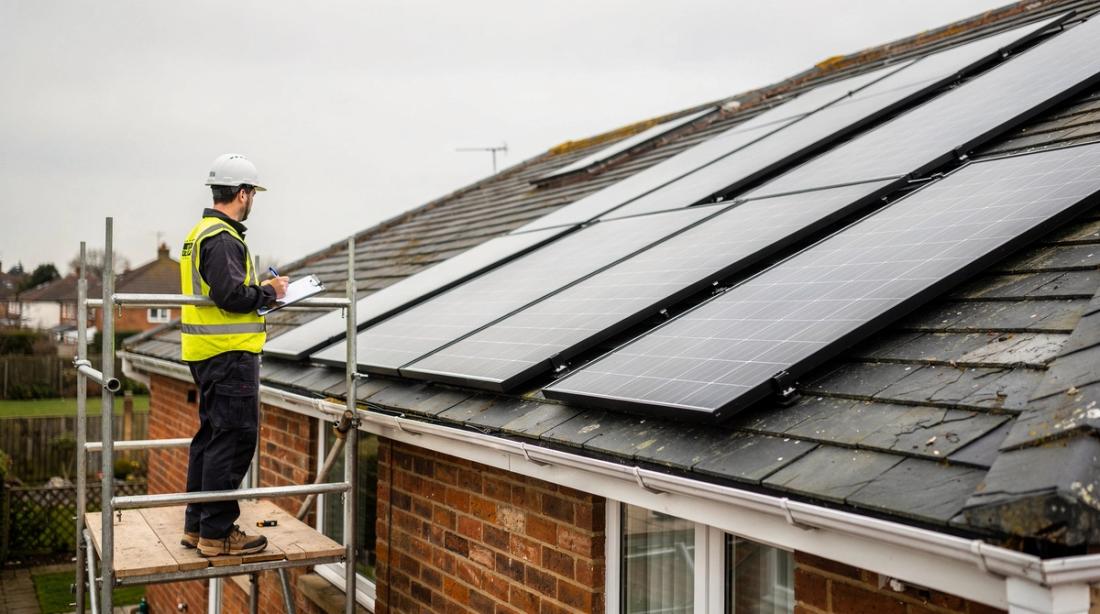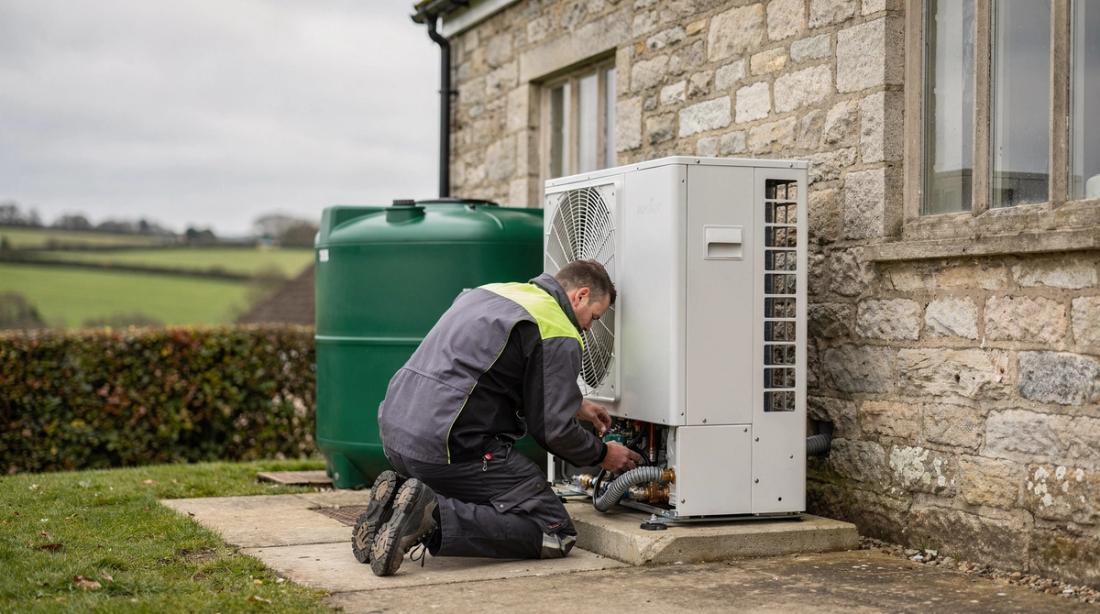

MCS compliance now decides whether most UK domestic renewable work can happen at all: the scheme recorded about 210,000 certified installations between January and June 2026, up 17% on the previous best start to a year (Renewable Energy Magazine, citing MCS data, 2026). Solar, battery and heat pump customers who want grants or export payments need an MCS-certified installer, so your certification is a sales asset as much as a quality mark.
The rules also moved this year. The redeveloped MCS installer scheme was approved on 23 February 2026, and installers began transferring onto it from 9 March 2026 (NICEIC, 2026). This guide explains what compliance means now, what changed, how it ties to grants and the Smart Export Guarantee, and how to build it into every job.
Key Takeaways
- MCS certification is not a legal requirement, but Boiler Upgrade Scheme grants and Smart Export Guarantee payments both depend on it (Ofgem, 2026).
- The redeveloped scheme adds a direct Installer Agreement with MCS, approved financial protection and an annual declaration (NICEIC, 2026).
- You now have 30 days, not 10, to create the installation certificate, which aligns with Building Control timelines.
- Batteries ride on solar jobs: 92% of 2026 battery installs went onto homes with solar panels, so design and document them as one system.
- Heat pump volumes fell 17% in the first half of 2026, and three quarters were government funded, so grant paperwork is the heart of that work.
What MCS compliance means for an installer
MCS compliance means your business and every installation meet the Microgeneration Certification Scheme standards for design, installation, commissioning and handover. It is not required by law to fit solar or heat pumps. It is, however, a condition of the Boiler Upgrade Scheme and the Smart Export Guarantee, which is why most domestic work depends on it (Ofgem, 2026; GOV.UK, 2026).
Compliance has two layers. The first is the company: you are assessed by a certification body against the installer scheme. The second is each job: the design, the installation and the paperwork must meet the technical standard for that technology, and the customer receives an MCS certificate for the system.
The certificate is the customer's proof that the job met the scheme's standards. If you want the detail of the technical documents behind it, read our guide to MCS standards.
What changed in the redeveloped MCS installer scheme in 2026?
The redeveloped scheme was approved on 23 February 2026, with transition starting on 9 March 2026 and expected to finish by June 2026. Installers now hold an Installer Agreement directly with MCS, buy an approved financial protection product and submit an annual declaration (NICEIC, 2026).
The main changes for day-to-day work are easy to list:
- Installer Agreement: a contract held directly with MCS, signed by a person now called the licensee.
- Financial protection: you must purchase an approved MCS financial protection product.
- Customer Commitment: it must be provided at the first point of contact and before the customer enters a contract.
- Certificate window: 30 days rather than 10 to create the installation certificate, aligned with Building Control.
- Roles: the nominee becomes the main contact and the technical person becomes the technical supervisor.
- Consumer code: NICEIC reports that membership is now optional, so confirm the position with your certification body before you drop yours.
Certification bodies had their own deadline. UKAS set 31 March 2026 as the final transition date for bodies moving to MCS 2025 v1.0, with assessments made up of a 0.5-day desktop review and a 1.0-day witnessed site assessment covering two MCS measures (UKAS, 2025).
For a side-by-side view of the transition, see our explainer on the redeveloped MCS installer scheme.
Becoming and staying certified: what you need
To be MCS certified you need a certification body, an Installer Agreement with MCS, approved financial protection, a technical supervisor with the right competence, and a quality system that your certification body can audit. You then repeat the cycle each year with the annual declaration and ongoing assessments (NICEIC, 2026).
In practice, the route looks like this:
- Choose a certification body. NAPIT and Certsure (NICEIC) are the first two bodies pursuing UKAS accreditation for air-to-air heat pump certification (MCS, 2026).
- Appoint a technical supervisor. For air-to-air heat pumps, this person must hold competence in Refrigeration, Air Conditioning and Heat Pumps (RACHP) at Level 3 or above (MCS, 2026).
- Document how you work. Your processes for design, commissioning, complaints and records must exist on paper and be followed on site.
- Sign the Installer Agreement and buy financial protection.
- Pass the assessments. Expect a review of your documents and a witnessed site visit.
Our step-by-step guide on how to become MCS certified covers the application side in more depth.
MCS requirements by technology
Each technology has its own installation standard on top of the installer scheme, and the redeveloped scheme keeps the existing MCS installation standards as its technical backbone (NICEIC, 2026). Your design, performance estimate, commissioning record and handover pack must follow the standard for the technology you fit.
The market data shows where each technology stands in 2026 (all figures from MCS data reported by Renewable Energy Magazine, 2026):
- Solar PV: almost 150,000 certified installations in January to June, a 14% increase on last year's record. Mounting and structural checks sit under MCS 012, covered in our MCS standards guide.
- Battery storage: 36,000 certified installations so far in 2026, nearly double the same period of 2025, with 92% going onto homes that have solar panels.
- Heat pumps: 17% lower than the first half of 2025, with three quarters funded by government programmes. Noise limits are assessed under MCS 020.
- Air-to-air heat pumps: UKAS approved the scheme updates on 8 September 2026, and systems must be optimised to deliver 100% of the property's heating requirements (MCS, 2026).
One in three 2026 installations was either added to a home with an existing MCS-certified renewable or combined more than one technology. That makes joined-up design records more valuable than ever.
How does MCS affect grants and export payments?
Installers must be MCS certified for customers to receive Boiler Upgrade Scheme grants: £7,500 for air-to-water, ground source and water source heat pumps, £9,000 in eligible off-gas properties until 31 March 2027, and £2,500 for air-to-air heat pumps in homes (Ofgem, 2026). Installers apply for and redeem vouchers on behalf of the property owner.
The Smart Export Guarantee works differently. The customer applies directly to a tariff supplier, and must show that the installation and the installer are certified through MCS or an equivalent scheme (GOV.UK, 2026).
Two practical consequences follow. First, a lapsed certification can leave a customer unable to claim, which damages your reputation. Second, your quote should state which support the customer can claim and what paperwork you will supply. For tariff comparisons you can share with customers, see our Smart Export Guarantee rates guide, and for the newest heat pump category, our air-to-air heat pump grant guide.
What do assessors check on a job?
Assessors check that the paperwork proves the job was designed, installed and commissioned to standard. UKAS transition assessments used a desktop review of documents followed by a witnessed site assessment covering two MCS measures, so records and on-site practice are both tested (UKAS, 2025).
Build a file for every job that would satisfy a stranger reading it a year later. At a minimum, keep:
- The Customer Commitment and quote, showing it was given before the contract was signed.
- The design and performance estimate, with the assumptions behind it.
- Component evidence, showing the products used are the ones certified for the job.
- Commissioning results, with who tested what and when.
- The handover pack and certificate, with the date the certificate was created.
The pre-sale information and system performance estimate rules form part of the documents released with the redeveloped scheme (Cooling Post, reporting MCS, 2025), so treat the estimate as an auditable document and not a sales graphic.
A quote-to-certificate compliance workflow
A reliable workflow ties every compliance step to a stage of the job, so nothing depends on memory. The one change to plan around in 2026 is the 30-day certificate window: set an internal deadline well inside it (NICEIC, 2026).
- Quote: give the Customer Commitment before any contract, confirm the customer's grant or export route, and issue the performance estimate.
- Design: record assumptions, shading, structural checks and heat load figures, and get an internal review before ordering.
- Procurement: check each product against its certification and file the datasheets.
- Installation and commissioning: follow your documented procedure and log test results on the day.
- Handover: supply the user pack and warranties, and collect the customer's acknowledgement.
- Certificate: create the MCS certificate within the 30-day window and file a copy.
- Review: log any problem found and update your procedures at your next internal review.
Grid connection runs alongside this, so agree DNO requirements before ordering larger systems.
Can software keep MCS records audit-ready?
Yes, if the software holds the same evidence an assessor will ask for: the quote, the design, the component certificates, the commissioning results and the signed handover, all attached to one job. Without that, records live in inboxes and spreadsheets and are hard to reassemble when a certification body asks.
Whatever tool you use, check four things. Does it keep dated versions of the design and estimate? Does it store certificates against each project? Does it show who signed off each step? Can you export a complete job file in one go? Our guide to digital tools for installers compares the options by workflow stage.
The aim is the same with a spreadsheet or a platform: a job file that proves the work, ready before the assessor arrives rather than after.
Frequently Asked Questions
Is MCS certification mandatory in the UK?
No. It is not a legal requirement to install solar or heat pumps. However, the Boiler Upgrade Scheme requires MCS-certified installers, and the Smart Export Guarantee requires the installation and installer to be certified through MCS or an equivalent scheme (Ofgem, 2026; GOV.UK, 2026).
Do I still need to join a consumer code?
NICEIC reports that consumer code membership is now optional under the redeveloped scheme, and that MCS manages complaints centrally (NICEIC, 2026). Check the current position with your certification body before changing anything, and see our comparison of HIES and RECC.
How long do I have to create the MCS certificate?
Under the redeveloped scheme you have 30 days to create the installation certificate, instead of the previous 10 days. The change aligns the certificate with Building Control timelines (NICEIC, 2026).
Can I certify air-to-air heat pump installations yet?
Not fully. UKAS approved the scheme updates for air-to-air heat pumps on 8 September 2026, and MCS says it can now move to the next stage of implementation. NAPIT and Certsure are the first certification bodies pursuing UKAS accreditation (MCS, 2026). Confirm availability with your body before quoting.
What is the Boiler Upgrade Scheme grant in 2026?
It is £7,500 for air-to-water, ground source and water source heat pumps, £9,000 for eligible off-gas properties until 31 March 2027, and £2,500 for air-to-air heat pumps in residential properties (Ofgem, 2026). Only MCS-certified installers can redeem vouchers.