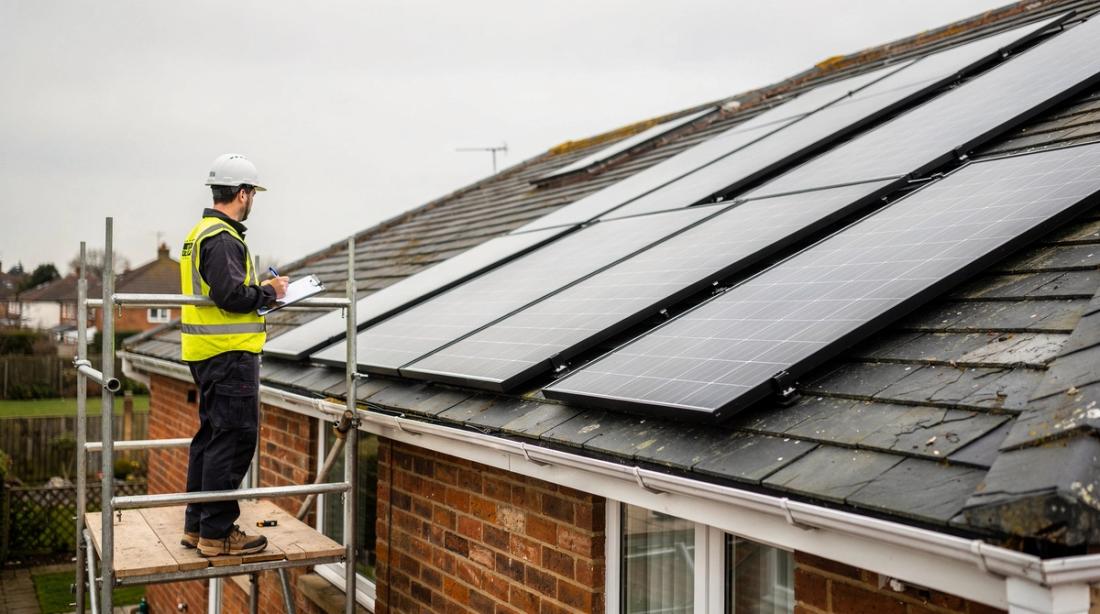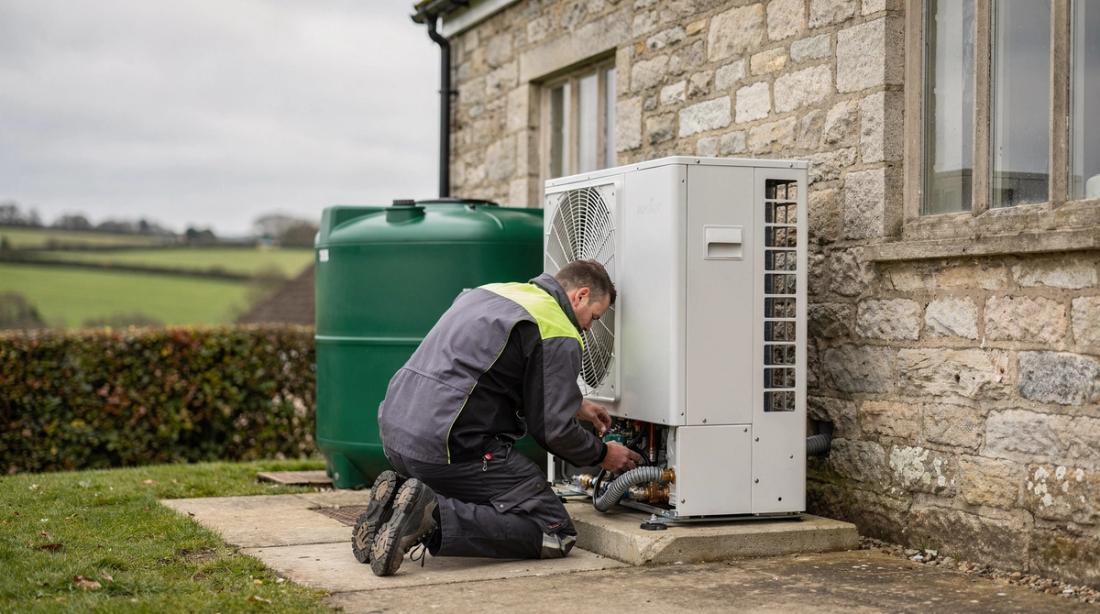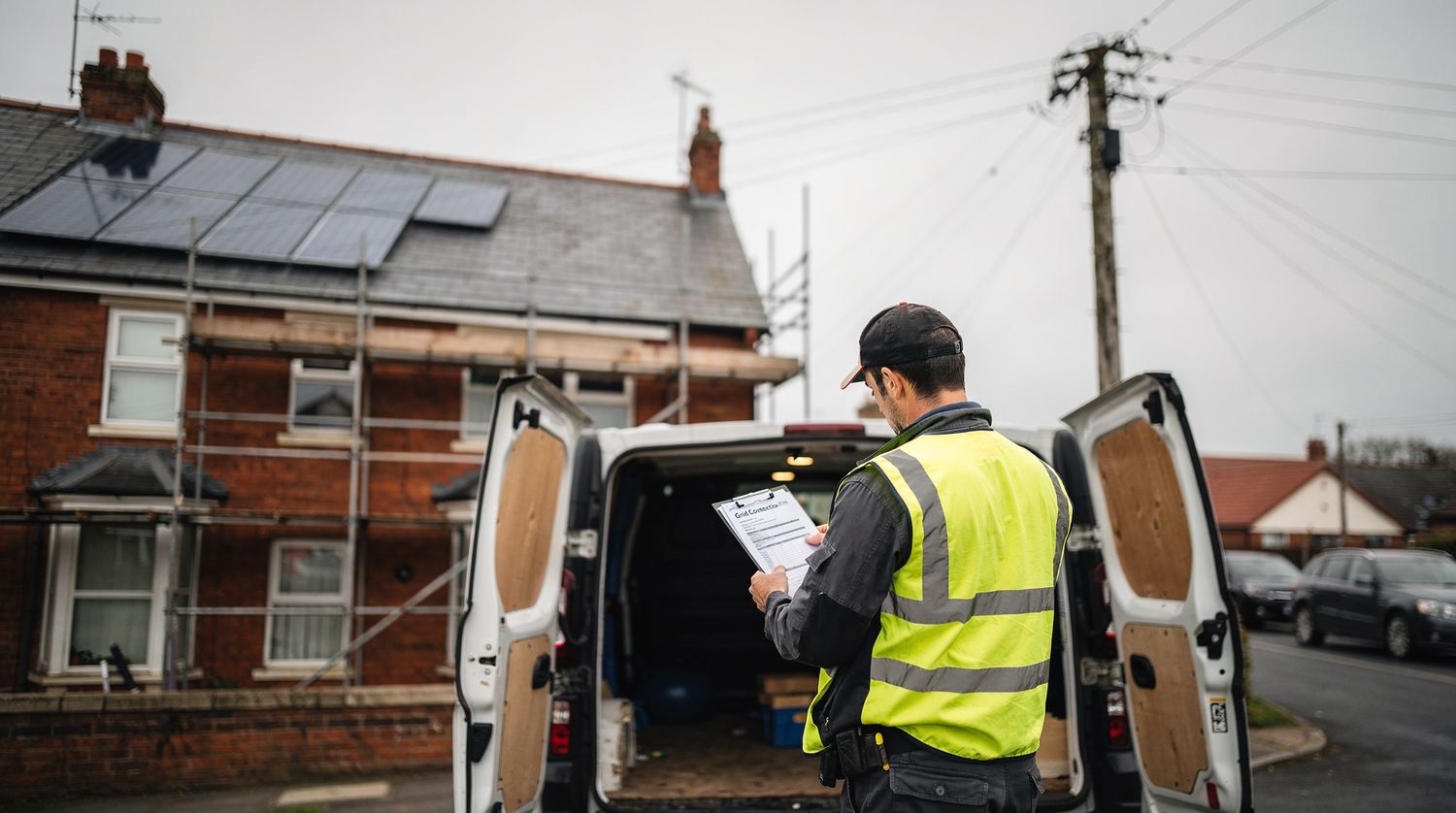

A G99 application is the request you send to your Distribution Network Operator (DNO) for permission to connect generation above 16 A per phase, or 3.68 kW on a single-phase supply (ENA EREC G99 Issue 2, 2025), and it matters more every month: MCS certified 36,000 battery installations in the first half of 2026, nearly double the same period of 2025. Unlike G98, G99 approval must arrive before installation starts. This guide covers which route applies, what goes in the pack, where to submit, what it costs and why applications bounce.
Key Takeaways
- Above 16 A per phase (3.68 kW single-phase) you apply under G99 and wait for DNO approval before installing. At or below it, G98 is fit and inform, with a 28-day DNO objection window (SurgePV, 2026).
- Capacity is counted for the whole connection point, so an AC-coupled battery added to an existing solar system can tip a site from G98 into G99.
- DNOs have 45 working days to issue a generation quotation involving LV works, with £85 per working day payable if they miss it (ENWL notice of rights, April 2026).
- Most domestic applications are free. NGED's minimum fee for a single small generator is £187, and SSEN charges nothing below 50 kVA.
- The usual rejection causes are an incomplete single line diagram, blank protection settings, an inverter without a type test reference and undeclared existing generation.
What Is the Difference Between G98 and G99?
The dividing line is 16 A per phase of export current, which is about 3.68 kW single-phase or 11 kW three-phase (SurgePV, 2026). At or below it, G98 applies and you notify the DNO. Above it, G99 applies: you submit, wait for approval, then install. Equipment up to 16 A per phase must be fully type tested (EREC G99, 2025).
Two details decide more jobs than the headline threshold. The limit is set by inverter AC export capacity, not panel kWp, so a 5 kWp array on a 3.68 kW inverter can stay inside G98. And the 16 A figure applies to total export from all generators at the connection point, not to each system on its own (SurgePV, 2026). Our G98 application guide covers the notify-after route in full.
G100 sits alongside both. Where the network cannot take full output, an export limitation scheme caps what leaves the site. NGED's guidance says a scheme should reduce export typically within 15 seconds, with a maximum reaction time of 60 seconds, and must fail safe if its components or signalling lose power. It also states that single-phase installed capacity must not exceed 17 kW for G99 compliance. Our G100 export limitation guide covers the design side.
Does Adding a Battery Trigger a G99 Application?
Often, yes. Because the 16 A threshold covers total export from all generators at a connection point, an AC-coupled battery with its own inverter added to a solar system already near 3.68 kW can push the site into G99 (SurgePV, 2026). DC-coupled batteries are handled differently, through export control on the shared inverter.
This is now the most common way installers meet G99. MCS reported more than 40,000 battery installations in 2025 and a record 267,032 certified solar installations, and the battery count then nearly doubled again in H1 2026. Our AC-coupled battery storage guide explains how the two coupling types differ on site.
There is also a version point. G99 Issue 2 took effect on 10 March 2025, and new requirements for electricity storage units apply from 1 March 2026. Storage connected on or after 1 September 2022 must comply fully, so check that your battery models are certified against the current issue before you specify them.
Step 1: Confirm the Connection Route Before You Quote
By the end of this step you can state the route and a realistic energisation timeline on the customer quote. A job priced as no paperwork that turns out to need G99 inherits a 45-working-day dependency nobody planned for. Four checks settle it during the survey:
- Record the MPAN and confirm whether the supply is single-phase or three-phase.
- Identify existing generation at the connection point, including anything a previous installer fitted. Undeclared kit is a classic rejection trigger.
- Sum the inverter AC ratings for everything that will exist after your work, per phase.
- Map the result to a route: 16 A per phase or below is G98, above it is G99, and a G100 export limit may let a larger system connect on a constrained network.
If you cannot name the route and the likely wait, the survey is not finished. Our solar PV site survey guide lists what to capture on the day so these checks do not slip.
Step 2: Assemble the Application Pack
A G99 pack needs the application form, an accurate single line diagram, protection settings, a site plan, inverter details with their ENA Type Test Register references, the MPAN and, if an agent applies, a letter of authority. SurgePV lists the application form, single line diagram, inverter datasheet, protection settings schedule and export limitation details as the Stage 1 documents (2026).
The single line diagram carries the most weight. It should show the array capacity and string count, DC isolators, each inverter with make, model and rated AC output, the AC isolator, protection, metering and any export limitation device, drawn with standard symbols. If SLDs are not yet part of your standard design output, our single line diagram guide shows what assessors expect.
Choose inverters from the type test register at design stage. Listed, fully type-tested equipment shrinks the pack and avoids questions about compliance evidence later.
Step 3: Submit, Accept the Offer and Commission
Small applications increasingly go through one front door. ENA Connect Direct, launched on 7 May 2024, has passed 405,000 completed applications, including 26,000 in May 2026 alone (ENA via Installer Online, 2026). It covers EV charge points, solar, heat pumps and batteries, and issues automatic approvals for routine cases while escalating complex ones to the network.
Larger or non-standard schemes still go direct to the DNO portal for your region. Check whether your job qualifies for Connect Direct or a fast-track route before defaulting to a full submission, and confirm response times with the DNO because they vary by network.
The offer arrives as an unconditional connection offer, an offer with conditions such as an export limit, or a requirement for network reinforcement with costs attached. Accept in writing, install to the approved design, and tell the DNO about any change to inverter make, model or protection settings. At commissioning, submit the date, test results and certificate reference, inverter serial numbers and confirmation that settings match what was approved. Keep the full file with the rest of your renewable installation paperwork.
How Long Does a G99 Application Take?
Under the guaranteed standards, a DNO has 45 working days to issue a generation quotation involving LV works, and it owes £85 for each working day it is late (ENWL notice of rights, April 2026). That is a ceiling, not a typical result. Connect Direct can approve routine applications instantly, and constrained networks can take far longer.
The tail risk is reinforcement. If the assessment finds the network needs upgrading, the offer carries costs and the timeline shifts from weeks to months. That is usually the moment to consider a G100 export-limited design instead of funding network works.
The planning rule is to submit at survey stage, not install stage. A G99 lodged the day the deposit lands runs in the background. One lodged the week before scaffolding becomes the bottleneck.
What Does a G99 Application Cost?
For most domestic jobs the answer is little or nothing. NGED lists a minimum fee of £187 for a single small-scale embedded generator (up to 16 A per phase), and SSEN states that microgeneration below 50 kVA is not charged connection offer expenses (2023 guide). Fees concentrate above that. NGED's published assessment and design fees (November 2024, excluding VAT) are:
- Single small-scale generator: £187
- Other LV generation up to 20 kVA: £620
- LV generation 20 to 50 kVA: £1,241
- LV generation above 50 kVA: £1,674
- HV generation up to 250 kVA: £2,003
- HV generation 250 kVA to 1 MVA: £2,251
- HV generation above 1 MVA: £3,184
Fee schedules change and differ by DNO, so confirm the current charging statement for your region before quoting a client. The pattern that small is cheap and larger HV schemes cost more has held across the published schedules.
Why Do G99 Applications Get Rejected?
Most rejections are process failures rather than engineering ones. The recurring causes are an incomplete or non-standard single line diagram, protection settings left blank or outside permitted ranges, an inverter without a valid type test reference, and undeclared existing generation at the connection point (SurgePV, 2026 lists the Stage 1 documents DNOs expect).
A fifth cause is the network itself. Where local capacity is short, the DNO attaches reinforcement costs and delay rather than a plain refusal. A redesign around a G100 export limit, resubmitted, keeps the system size the customer paid for while capping what the grid sees. A short pre-submission checklist catches nearly everything:
- SLD complete, standard symbols, every inverter with make, model and AC rating
- Protection settings filled in and inside G99 ranges
- Type test register reference recorded for each inverter
- Existing on-site generation declared, even historic kit
- MPAN checked character by character
G99 stops being a bottleneck when it becomes a workflow: decide the route at survey, build the pack from the design file, submit early, track the 45-working-day clock and close out commissioning the week you energise. Design software such as Reonic can produce the single line diagram from the design so the pack starts from one source.
FAQ
Q: What is the difference between a G98 and a G99 application?
G98 covers type-tested generation up to 16 A per phase (3.68 kW single-phase) and is a fit-and-inform route with a 28-day DNO objection window. G99 covers anything larger, and the DNO must assess and approve the connection before installation begins (EREC G99 Issue 2, 2025; SurgePV, 2026).
Q: How long does a G99 application take?
The DNO has 45 working days to issue a generation quotation involving LV works and owes £85 per working day if it is late (ENWL, April 2026). Routine applications through ENA Connect Direct can be approved automatically, while constrained networks can take much longer.
Q: How much does a G99 application cost?
Often nothing for domestic work. SSEN does not charge below 50 kVA, and NGED's minimum assessment fee for a single small generator is £187 (November 2024). Fees rise with scale, reaching £3,184 for NGED HV generation above 1 MVA.
Q: Does adding a battery trigger a G99 application?
Often. The 16 A per phase threshold applies to total export at the connection point, so an AC-coupled battery inverter added to an existing solar system can push the site over it. MCS certified 36,000 battery installations in H1 2026, nearly double H1 2025.
Q: Can export limitation avoid a full G99 assessment?
It can simplify one but does not remove the process. A G100 scheme must reduce export typically within 15 seconds (60 seconds maximum) and fail safe, and NGED states that single-phase installed capacity must not exceed 17 kW for G99 compliance.