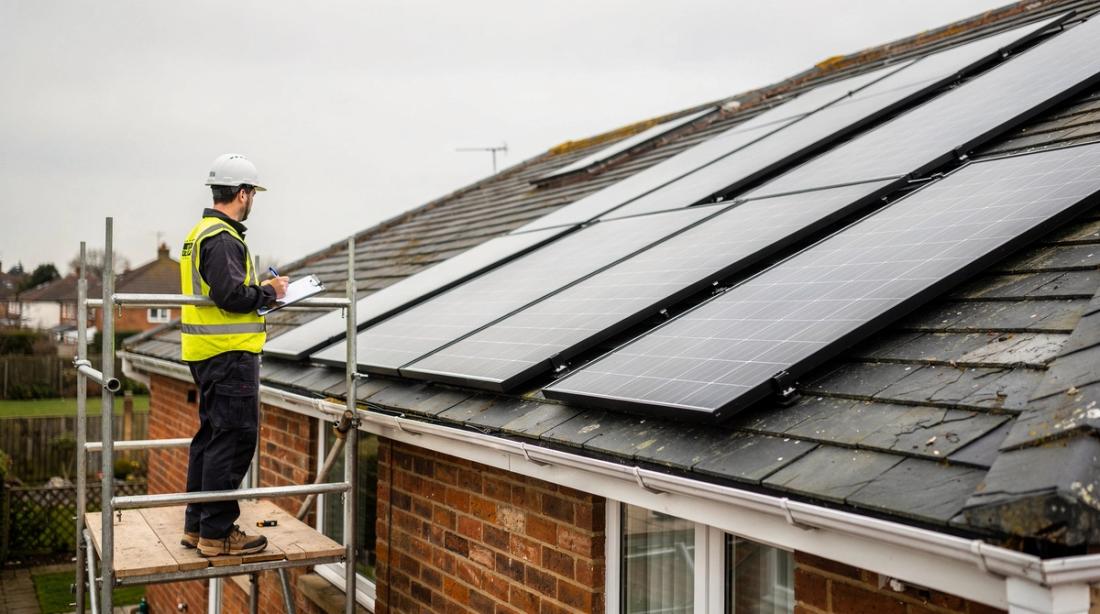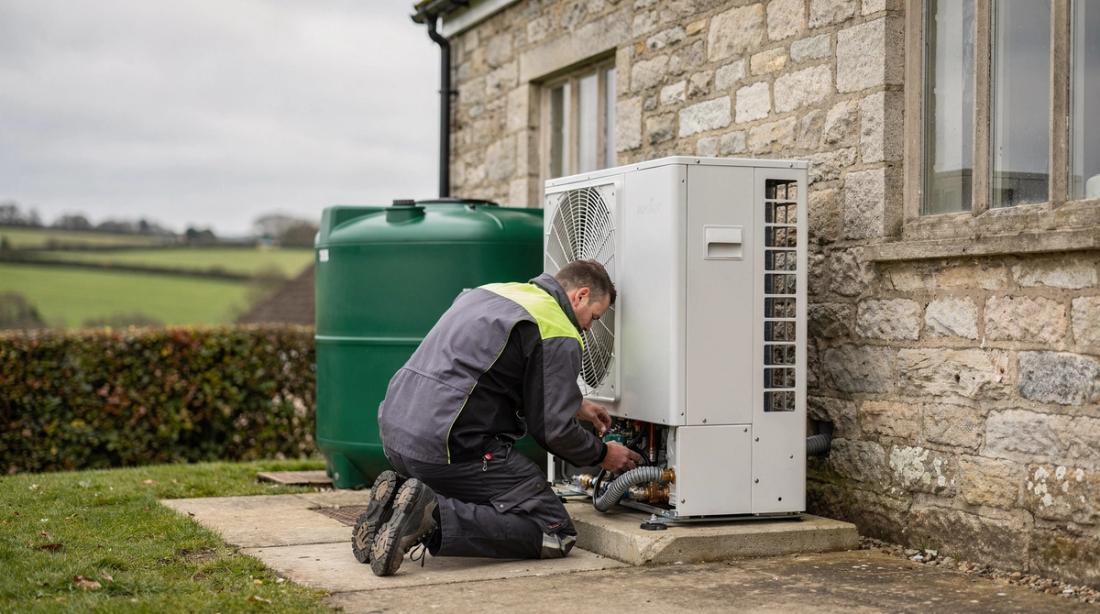

The SFG20 standard is the UK's maintenance specification for building services, and its library now holds over 1,500 schedules across more than 110 asset classes (SFG20, 2026). It was written with boilers, chillers and lifts in mind, but the same planning logic applies to solar PV, heat pumps and batteries now that more buildings host them every year.
The shift is easy to see in the data. MCS certified almost 150,000 solar PV installations and 36,000 batteries in the first half of 2026 alone (MCS, 2026). Every system adds an asset that someone must inspect, service and record. This guide explains how SFG20 works, which legal duties sit behind it, and how to map renewable assets to its schedules.
Key Takeaways
- SFG20 is published by BESA and holds over 1,500 schedules, with over 700 updates made each year (SFG20, 2026).
- Red tasks are statutory. Amber tasks are best practice that the law does not require.
- Regulation 4(2) of the Electricity at Work Regulations 1989 requires electrical systems to be maintained to prevent danger, and HSE sets no fixed test interval.
- Heat pumps fall under F-gas leak checks from 5 tonnes CO2e upwards, and the frequency rises with the refrigerant quantity.
- SFG20 is a planning layer. It does not replace manufacturer instructions or statutory requirements.
What is the SFG20 standard?
SFG20 is a library of maintenance specifications for building services, created in 1990 by BESA and now holding over 1,500 schedules and more than 110 asset classes, with over 700 updates made each year (SFG20, 2026). Each schedule lists tasks, frequencies and the skills required, so a facilities team can plan work without writing specifications from scratch.
Access runs through the Facilities-iQ platform, which SFG20 says connects to CAFM, CMMS and IWMS systems through an API (SFG20, 2026). In practice that means the schedules can feed the work-order tools an estate already uses, rather than sitting in a separate spreadsheet that nobody updates.
SFG20 is a specification, not a law. Nothing in it replaces manufacturer instructions or statutory requirements. What it adds is a consistent, auditable way to decide what gets done, how often it happens and who does it, which matters most when one site holds several different asset types.
Why SFG20 matters for solar PV, heat pumps and batteries
Renewable assets are growing fast inside managed buildings. MCS recorded 14% more solar PV installations in the first half of 2026 than in the same period of 2025, itself a record, and battery installations almost doubled (MCS, 2026). More assets mean more inspections, more records and more chances for a missed task to become a failure.
Heat pumps are the exception to the growth story, with installations 17% lower than in the first half of 2025 (MCS, 2026). The installed base is still large, though, and every unit needs servicing. The heat pump servicing guide covers the work itself. SFG20 gives a way to schedule and evidence that work across many sites.
Three problems recur in mixed estates. Tasks are missed because each asset type follows a different supplier calendar. Records end up in different places. And reactive repair becomes the default, which is harder to budget for. A single schedule library addresses the first two directly and makes the third easier to manage.
How do the SFG20 colour codes work?
SFG20 rates every task by criticality: red for statutory tasks, pink for mandatory business-critical work, amber for optimal best practice and green for discretionary jobs (SFG20, 2026). The rating tells you what must happen to stay legal and what you can defer when budgets are tight.
- Red (statutory): tasks that may assist in achieving legal compliance, such as electrical safety checks tied to the Electricity at Work Regulations 1989.
- Pink (mandatory): business-critical, contractual or operational tasks that are not statutory. Organisations apply these when they tailor a schedule.
- Amber (optimal): function-critical or best-practice tasks that are not directly linked to legislation.
- Green (discretionary): non-critical work, such as window cleaning or meter readings.
SFG20 states that red tasks should be completed to achieve compliance, while amber tasks are not required by law (SFG20, 2026). A fixed-wiring and isolator check on a PV system is the kind of task that usually lands red, whereas module cleaning is a judgement call you rate by yield risk. Confirm each rating in the schedule itself, and see the DC isolator guide for the safety detail.
The legal duties behind renewable asset maintenance
Regulation 4(2) of the Electricity at Work Regulations 1989 requires electrical systems to be maintained so as to prevent danger where that is necessary (legislation.gov.uk, 1989). The regulation names no interval, which is why a documented schedule is the practical way to show you met it.
HSE gives no fixed test interval either. Its guidance says installations should be tested often enough that there is little chance of deterioration leading to danger, that harsher environments need more frequent checks, and that the decision and results should be recorded (HSE, accessed 2026). A schedule with a documented rationale for each interval fits that approach.
Heat pumps add a refrigerant duty. GOV.UK guidance puts stationary heat pumps in scope of F-gas leak checks: every 12 months from 5 tonnes CO2e and every 6 months from 50 tonnes, with automatic leak detection required for most equipment at 500 tonnes or more (GOV.UK, 2026). Leaks must be repaired as soon as possible and retested within one month. Check the unit's charge and refrigerant before assuming a small system is exempt.
Battery systems bring their own rules, which the guide to lithium-ion battery storage regulations sets out. Whatever the asset, the legal trigger should be written into the schedule as a red task so that it cannot be dropped in a budget review.
How do you map renewable assets to SFG20 schedules?
Build an asset register, match each asset to the closest SFG20 schedule, set the criticality, then tailor the frequencies to the manufacturer's instructions. SFG20 treats pink tasks as the way organisations add contractual or business-critical work when they tailor a schedule (SFG20, 2026).
- Step 1, build the register. List every PV array, inverter, battery, heat pump, EV charger, isolator and meter, with location, install date and warranty terms.
- Step 2, match schedules. Find the nearest SFG20 schedule for each asset type and note where none fits. Gaps need a bespoke task list based on manufacturer documents.
- Step 3, rate and tailor. Confirm the red tasks first, add pink tasks for warranty or contract conditions, then rate the rest amber or green.
- Step 4, set frequencies. Follow the manufacturer where it is stricter than the schedule, and record why any interval differs.
- Step 5, connect monitoring. Use inverter and battery alerts to trigger corrective visits outside the planned cycle.
- Step 6, review each year. Remove tasks that never find anything and add checks where faults cluster, which matches the HSE advice to adjust intervals by the faults found.
The list below shows what drives the interval for each asset. It deliberately gives no universal frequencies, because the right interval comes from the manufacturer, the site and the legal trigger.
- Solar PV array and inverter: the driver is regulation 4(2) plus manufacturer instructions. Electrical safety checks are the likely red tasks, while cleaning and visual inspection suit amber.
- Heat pump: the driver is the F-gas leak check band set by CO2e, plus the manufacturer service. The leak check is red wherever it applies.
- Battery storage: the driver is manufacturer instructions, insurer conditions and the lithium-ion rules. Warranty-linked checks suit pink.
- EV charger: the driver is manufacturer instructions and electrical safety checks. Cable inspection and firmware updates suit amber.
Record inverter warranty end dates in the register as well. The solar inverter replacement guide covers what happens when one fails, and the solar panel maintenance guide covers the array itself.
How does SFG20 support the golden thread?
The golden thread is the digital record of building information that must be kept for higher-risk buildings, defined as at least 7 storeys or 18 metres with two or more residential units, or a hospital or care home (GOV.UK, 2024). Maintenance data for plant and equipment belongs in that record.
SFG20's own article on the golden thread lists operation and maintenance information, how critical systems are maintained and the plant and equipment installed among the content, and says the information must be kept digitally, stored securely and kept up to date (SFG20, 2026). Occupation-phase duties for accountable persons came into force on 16 January 2024.
Most solar and heat pump work happens on homes and small commercial sites outside the higher-risk definition. For those, the golden thread is not a legal duty. The same habit of a version-controlled digital record still makes handover, audits and warranty claims easier.
Connecting SFG20 to digital maintenance tools
SFG20 content is delivered through Facilities-iQ, which the provider says integrates with CAFM, CMMS and IWMS systems and syncs accepted changes automatically (SFG20, 2026). The aim is one place where tasks, dates, owners and evidence sit, so audits do not depend on someone's inbox.
Installers who run service contracts across many customers, rather than a single estate, can compare options in the guide to digital tools for installers. The selection question is the same either way: can the tool hold your asset register, attach evidence to each task and show what is overdue at a glance?
Whichever platform you use, tie each task to evidence. A dated sign-off, readings or photographs, and the name of the person who did the work answer the question HSE guidance expects you to be able to answer, which is what was decided and what the results were.
Where SFG20 stops
SFG20 is a specification library for building services. It does not model yield, tariffs or system design, and it does not replace manufacturer instructions, MCS requirements or commissioning data. SFG20 itself says amber tasks are not required by law (SFG20, 2026), so treat it as the planning layer and keep performance data in monitoring tools.
A useful rule: if a task is needed to stay legal or keep a warranty valid, make it explicit in the schedule. If it exists to improve yield, rate it amber and review the evidence after a year. That keeps the budget conversation honest about what is optional.
Small domestic systems rarely justify a full CAFM set-up. A single sheet holding the register, the tasks above and a yearly review captures most of the value. Reonic builds software for UK installers, and the design and handover data from a project is a sensible seed for that register, while SFG20 schedules themselves come from SFG20's own platform.
FAQ
What is the SFG20 standard and who maintains it?
SFG20 is a library of maintenance specifications for building services, created in 1990 and published by BESA. It holds over 1,500 schedules covering more than 110 asset classes, and SFG20 reports over 700 updates a year (SFG20, 2026). Each schedule sets out tasks, frequencies and criticality ratings.
Is SFG20 mandatory for solar PV or heat pump installations?
No. SFG20 is a specification, not legislation. The legal duties sit elsewhere, such as regulation 4(2) of the Electricity at Work Regulations 1989 and the F-gas leak check rules for heat pumps. Following SFG20 helps you show that maintenance was planned and recorded, but it does not replace those legal requirements.
What do the SFG20 colour codes mean?
Red marks statutory tasks, pink marks mandatory business-critical work, amber marks optimal best practice and green marks discretionary tasks (SFG20, 2026). SFG20 states that amber tasks are not required by law, so red tasks and any contractual pink tasks should be protected first when budgets are reviewed.
How often should heat pump refrigerant be leak checked?
GOV.UK sets checks every 12 months from 5 tonnes CO2e and every 6 months from 50 tonnes, with automatic leak detection required for most equipment at 500 tonnes or more (GOV.UK, 2026). Leaks must be repaired as soon as possible and retested within one month. Check the unit's charge and refrigerant to find which band applies.
Does the golden thread apply to solar panels?
Only on higher-risk buildings: at least 7 storeys or 18 metres, with two or more residential units or a hospital or care home (GOV.UK, 2024). There, maintenance information for plant and equipment belongs in the digital record. Most domestic roofs fall outside that scope, though the same record keeping still helps.